
Online Database of Chemicals from Around the World
| Hangzhou Viwa Co., Ltd. | China | |||
|---|---|---|---|---|
 | www.viwachina.com | |||
 | +86 (571) 5683-6886 5683-2058 5683-6878 | |||
 | +86 (571) 8717-5163 / 8785-8383 | |||
 | sales@viwachina.com | |||
| Chemical manufacturer since 2004 | ||||
| chemBlink Standard supplier since 2007 | ||||
| Asia Talent Chemical Limited | China | |||
|---|---|---|---|---|
| www.atchem.net | |||
| +86 (755) 8665-5561 | |||
| +86 (755) 8665-5591 | |||
| jeffreyxu@atchem.net sinochemxu@hotmail.com asiatalentchem@gmail.com | |||
 | QQ Chat | |||
 | Skype Chat | |||
| Chemical manufacturer | ||||
| chemBlink Standard supplier since 2007 | ||||
| Simagchem Corporation | China | |||
|---|---|---|---|---|
| www.simagchem.com | |||
| +86 13806087780 | |||
| +86 (592) 268-0237 | |||
| sale@simagchem.com | |||
| Chemical manufacturer since 2002 | ||||
| chemBlink Standard supplier since 2008 | ||||
| Zhejiang Ouhua Chemical Imp. & Exp. Co., Ltd. | China | |||
|---|---|---|---|---|
| www.ouhuachem.com | |||
| +86 (576) 8882-6717 | |||
| +86 (576) 8882-8330 | |||
| ouhuachem@gmail.com | |||
| Chemical distributor | ||||
| chemBlink Standard supplier since 2009 | ||||
| Hefei TNJ Chemical Industry Co., Ltd. | China | |||
|---|---|---|---|---|
| www.tnjchem.com | |||
| +86 (551) 6541-8684 | |||
| +86 (551) 6541-8697 | |||
| sales@tnjchem.com | |||
| Chemical manufacturer since 2001 | ||||
| chemBlink Standard supplier since 2010 | ||||
| BOC Sciences | USA | |||
|---|---|---|---|---|
| www.bocsci.com | |||
| +1 (631) 485-4226 | |||
| +1 (631) 614-7828 | |||
| info@bocsci.com | |||
| Chemical manufacturer | ||||
| chemBlink Standard supplier since 2010 | ||||
| Eastar Chemical Corporation | USA | |||
|---|---|---|---|---|
| www.eastarchem.com | |||
| +1 800-898-2436 | |||
| +1 (877) 898-2436 | |||
| info@eastarchem.com | |||
| Chemical manufacturer since 1989 | ||||
| chemBlink Standard supplier since 2014 | ||||
| Labseeker Inc | USA | |||
|---|---|---|---|---|
| www.labseeker.com | |||
| +1 (858) 750-1632 | |||
| +1 (858) 412-1220 | |||
| marketing@labseeker.com | |||
| Chemical manufacturer since 2002 | ||||
| chemBlink Standard supplier since 2015 | ||||
| Hangzhou Leap Chem Co., Ltd. | China | |||
|---|---|---|---|---|
| www.leapchem.com | |||
| +86 (571) 8771-1850 | |||
| market19@leapchem.com | |||
| QQ Chat | |||
| Chemical manufacturer since 2006 | ||||
| chemBlink Standard supplier since 2015 | ||||
| Hongkong Solun Co., Limited | China | |||
|---|---|---|---|---|
| www.solun.hk | |||
| +86 13486804800 | |||
| hugo@solun.hk | |||
| Chemical distributor since 2016 | ||||
| chemBlink Standard supplier since 2017 | ||||
| Pharmaccare | UK | |||
|---|---|---|---|---|
| www.pharmaccare.com | |||
| +44 7362050789 | |||
| duranjohnson16@gmail.com | |||
| Chemical distributor since 2020 | ||||
| chemBlink Standard supplier since 2026 | ||||
| Siegfried (USA), Inc. | USA | |||
|---|---|---|---|---|
| www.siegfried.ch | |||
| +1 (877) 763-8630 | |||
| +1 (856) 678-8201 | |||
| info@siegfried-usa.com | |||
| Chemical manufacturer | ||||
| Classification | API >> Antipyretic analgesics >> Antipyretic and analgesic |
|---|---|
| Name | Analgin |
| Synonyms | Dipyron; Metamizol; Methapyrone; Sulpyrine; Sodium [(1,5-dimethyl-3-oxo-2-phenyl-pyrazol-4-yl)-methyl-amino]methanesulfonate |
| Molecular Structure | 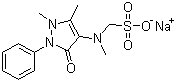 |
| Molecular Formula | C13H16N3NaO4S |
| Molecular Weight | 333.34 |
| CAS Registry Number | 5907-38-0 |
| EC Number | 611-790-7 |
| SMILES | CC1=C(C(=O)N(N1C)C2=CC=CC=C2)N(C)CS(=O)(=O)[O-].O.[Na+] |
| Hazard Symbols |  GHS08 Warning Details | ||||||||||||||||||||||||||||||||||||
|---|---|---|---|---|---|---|---|---|---|---|---|---|---|---|---|---|---|---|---|---|---|---|---|---|---|---|---|---|---|---|---|---|---|---|---|---|---|
| Risk Statements | H361-H413 Details | ||||||||||||||||||||||||||||||||||||
| Safety Statements | P203-P273-P280-P318-P405-P501 Details | ||||||||||||||||||||||||||||||||||||
| Hazard Classification | |||||||||||||||||||||||||||||||||||||
| |||||||||||||||||||||||||||||||||||||
| SDS | Available | ||||||||||||||||||||||||||||||||||||
 chemBlink Chemical Story
|
One familiar medicine can have several names and more than one solid-state form. Analgin, dipyrone, and metamizole are names associated with the same drug family. For CAS 5907-38-0, however, the product identity is more specific: metamizole sodium monohydrate. The water of crystallization distinguishes this entry from the anhydrous sodium salt registered as CAS 68-89-3. The monohydrate contains one formula unit of water for each formula unit of the sodium salt. This is part of the solid's defined composition, not simply an instruction to dissolve the material in water. The distinction affects formula mass and how a weighed amount is related to the amount of metamizole sodium present. An assay reported on a dried or anhydrous basis therefore needs to be read together with its stated calculation basis. Reference-standard suppliers identify this monohydrate for pharmaceutical analysis. Such a standard provides a characterized comparison material for a measurement. Its assigned content, water specification, and intended use are more informative than assuming that a familiar drug name alone defines everything in the bottle. A reference standard is also not automatically a finished medicine suitable for administration. Solid composition and solution chemistry answer different questions. Once a sample is dissolved, the analytical method must account for what species are present under the chosen conditions. A 2008 electrochemical and electrophoretic study of sodium metamizole found that solution composition and formation of degradation products depended on the medium. The study illustrates why the identity of a weighed starting solid does not guarantee that every later analytical signal represents unchanged parent compound. This is particularly relevant to metamizole because chemical transformation is also connected with its pharmacology. The drug is known for analgesic and antipyretic use, but the original sodium salt and its transformation products should not be collapsed into one analytical label. Measuring an intact ingredient in a formulation and measuring a metabolite in a biological sample are different applications requiring different reference substances and interpretation. Its medical history also includes a significant safety issue. In its 2024 review, the European Medicines Agency reinforced measures addressing agranulocytosis, a serious reduction in a class of white blood cells. That risk concerns metamizole-containing medicines and is not removed by choosing the monohydrate rather than the anhydrous solid. Hydration state describes composition; it is not a separate guarantee of clinical safety. The formula masses make the hydration distinction concrete. The monohydrate is approximately 351.35 grams per mole, compared with approximately 333.34 grams per mole for the anhydrous salt. Equal weighed masses therefore do not contain equal numbers of sodium-salt formula units. This is an analytical composition issue, not a recommendation to convert between medicinal products by a simple mass calculation. A laboratory specification can address several independent questions at once: which chemical form is intended, how much water is present, how the main constituent was assayed, and what impurities were investigated. A percentage without its basis leaves part of that information unstated. Reading these items together is particularly important when comparing a hydrated reference material with a result expressed on an anhydrous basis, or when comparing methods that measure different chemical species after dissolution. Analgin under this CAS number therefore offers a useful story about precision. A common name connects the material with a long-used medicine, while the hydrate designation defines the actual solid form. Keeping those levels distinct helps laboratories compare measurements, interpret specifications, and avoid treating two related database entries as either unrelated drugs or automatically interchangeable weighed materials. References: 1. Sigma-Aldrich. Metamizole sodium EP Reference Standard; CAS 5907-38-0; formula includes one water of crystallization. https://www.sigmaaldrich.com/ID/en/product/sial/m0600900 2. Basaez L et al. Electrochemical and electrophoretic study of sodium metamizole. J Chil Chem Soc. 2008;53:1572-1575. https://doi.org/10.4067/S0717-97072008000300004 3. European Medicines Agency. Metamizole-containing medicinal products: 2024 review and measures concerning agranulocytosis. https://www.ema.europa.eu/en/medicines/human/referrals/metamizole-containing-medicinal-products-0 |
| Market Analysis Reports |